When do I REALLY need to remove a tree? Can't I just trim it?
This is probably the first question folks ask when they call me about a tree. Look, I'm a tree guy, I genuinely love trees, and my main goal is always to save them if we possibly can. But sometimes, taking one out is the only safe and responsible choice. You're probably looking at removal if:
- It's dead or dying. A dead tree is a hazard. Full stop. It's unstable, it invites pests, and eventually, it's going to fall. That could be on your house, your car, or even your neighbor's property. If it's more than half dead, especially if it's a big one, it's time we talked about getting rid of it.
- It's diseased beyond recovery. Some tree diseases, like oak wilt, can spread super fast and wipe out whole groves. If your tree has a serious, untreatable illness, removing it helps protect your other healthy trees.
- It's structurally unsound. Maybe there's a huge crack in the trunk, or major limbs are just splitting apart. After hurricanes like Harvey or Laura, we saw tons of trees around Orangefield and Little Cypress that looked fine on the outside but had hidden structural damage. These can come down without any warning, you know?
- It's too close to your house or power lines. If a tree's roots are messing with your foundation or its branches are constantly scraping against your roof, that's a real problem. Same deal with power lines – that's a job for the pros, and often, removal is safer than endless trimming.
- It's causing significant damage. Roots can crack driveways, sidewalks, and even plumbing pipes. If the cost of fixing that damage over and over again starts to outweigh the tree's value, then removal just makes sense.
Trimming is fantastic for keeping trees healthy, shaping them, and getting rid of small dead branches. But it won't fix a tree that's fundamentally sick or unstable.
How much does tree removal cost in Orange, TX?
Alright, let's get down to the nitty-gritty. I really wish I could just give you one simple number, but tree removal costs vary a lot. It's not like buying a gallon of milk, after all. Here's what goes into the price:
- Size of the tree: A small ornamental tree is way cheaper to remove than a massive live oak or a big old pecan tree. We look at height, trunk diameter, and how wide the canopy spreads.
- Location and accessibility: Is the tree right in your front yard with easy access, or is it tucked away in the backyard, surrounded by fences, sheds, and your prize-winning azaleas? The tougher it is to get equipment to, or the more careful we have to be, the more it costs.
- Condition of the tree: A dead, brittle tree can sometimes be more dangerous and needs more specialized rigging than a healthy one.
- Proximity to hazards: Is it hanging over your house, power lines, a swimming pool, or a neighbor's property? That means more precise cuts, more ropes, and more time, which definitely adds to the cost.
- Stump removal: Do you want the stump ground down? That's usually an extra service.
- Debris removal: Do you want us to haul away all the wood and branches, or are you happy to keep some for firewood or mulch? Hauling costs money.
Honestly, the best way to get an accurate price is to call me, or another reputable company like Top Notch Tree Solutions, for a free, on-site estimate. We can look at your specific situation and give you a solid quote.
Do I need a permit to remove a tree in Orange, TX?
Generally speaking, for trees on private residential property here in Orange, TX, you usually don't need a permit from the city to remove a tree unless it falls under some specific circumstances. However, this isn't a universal rule, mind you. Some cities have pretty strict tree ordinances, especially for certain species or trees above a certain size. It's always smart to check with the City of Orange's planning or public works department, or even your HOA if you have one, just to make sure. A quick call is way better than getting hit with a fine later, right? We can help you figure this out too if you're unsure.
What about my power lines? Can you remove a tree near them?
If a tree is touching or very close to power lines, that's a serious safety hazard. As a professional tree service, we're trained and equipped to work safely around power lines, but we also know our limits. For primary service lines (the big ones running down the street), you should always contact your utility company (like Entergy) first. They often have specific crews or contractors who handle line clearance. For the service line running from the pole to your house, we can usually handle that, but we'll always assess the risk and might recommend having the power temporarily disconnected by the utility company for safety. Never, ever try to trim or remove a tree near power lines yourself. It's just not worth the risk of electrocution.
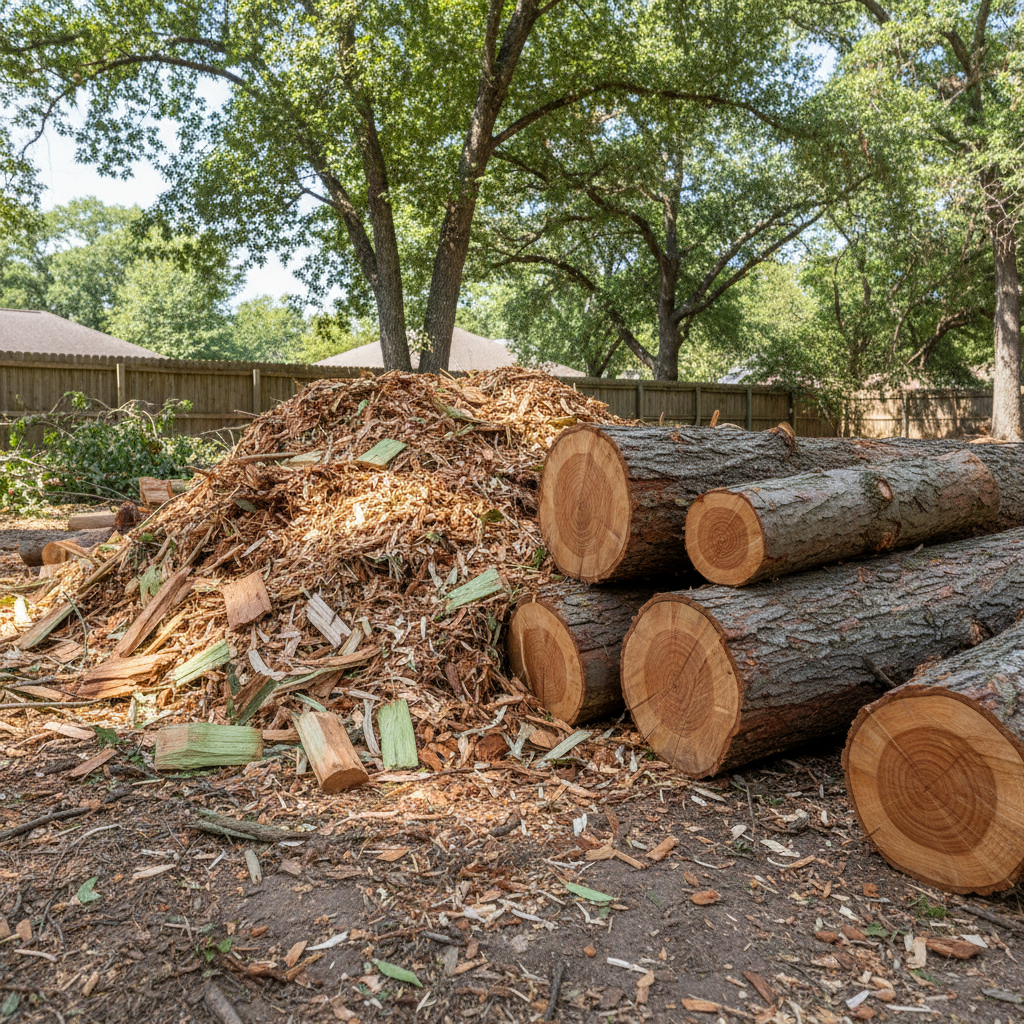
What happens to the wood after you cut down my tree?
You've got a few options here, and it does affect the final cost. We can:
- Haul it all away: This is what most people ask for. We'll chip the smaller branches and haul away the larger logs. This is usually part of the full removal price.
- Leave it for firewood: If you've got a fireplace or a fire pit, we can cut the usable logs into manageable lengths and stack them for you. This can sometimes reduce the cost a bit since we don't have to pay for disposal or transport.
- Leave the chips: If we're chipping branches, we can leave the wood chips for you to use as mulch in your garden beds. Just let us know beforehand.
We'll discuss these options with you during the estimate so you can decide what works best for your property.
Should I try to remove a tree myself to save money?
Look, I get it. Everyone wants to save a buck. But tree removal, especially for anything bigger than a small sapling, is incredibly dangerous work. I've seen too many DIY attempts go wrong, leading to property damage, serious injuries, or worse. We're talking about heavy falling objects, sharp tools, heights, and sometimes power lines. Professional tree services like Top Notch Tree Solutions have:
- Specialized equipment: Cranes, lifts, chippers, ropes, rigging gear – stuff you don't just have lying around, right?
- Training and experience: We know how trees fall, how to make precise cuts, and how to safely bring down large sections.
- Insurance: This is huge. If something goes wrong and your house or a neighbor's property gets damaged, our insurance covers it. If you do it yourself and mess up, you're on the hook for everything.
For your safety and your wallet in the long run, please, hire a professional. It's an investment in your well-being.