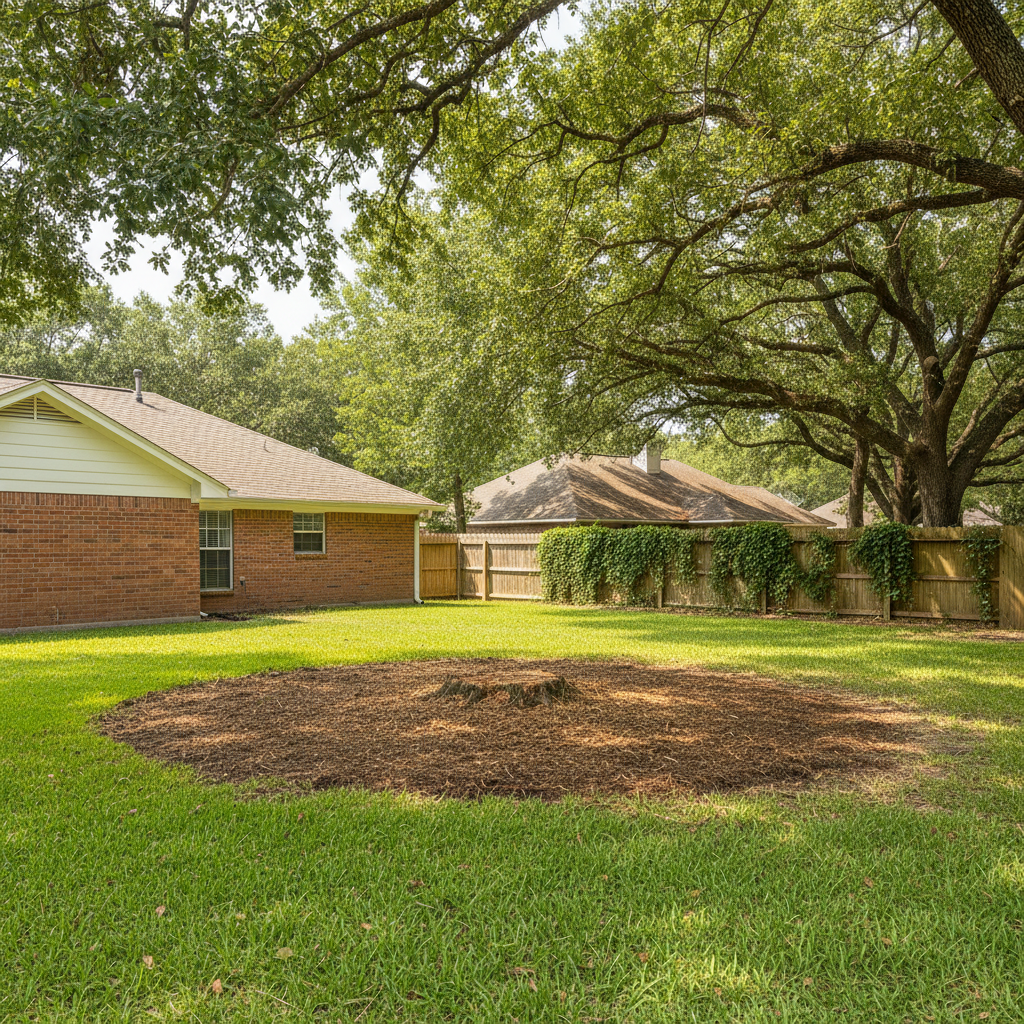
That old tree stump in your yard? It’s more than just an eyesore, really. It’s a tripping hazard, a cozy home for pests, and honestly, it can totally mess up your plans for new landscaping. Getting rid of it seems simple enough, right? Just grind it down or dig it out. But I’ve seen firsthand, working with folks all over Orange, TX, how easy it is to make mistakes that turn a straightforward job into a real headache.
Mistake #1: Not Knowing the Difference Between Grinding and Removal
This is probably the biggest misunderstanding out there. When you say 'stump removal,' most people picture a clean slate, like the tree was never even there. But 'stump grinding' is usually what happens. Grinding means a machine grinds the stump down several inches — or even a foot or more — below ground level. It leaves behind a pile of wood chips and a hole where the stump used to be. The roots are still there, just deeper, you know? Full 'stump removal' means digging out the entire stump and as much of the root system as possible, which is a much bigger, more invasive, and frankly, a more expensive job.
You need to be clear with whoever you hire about what you expect. If you just want to plant grass, grinding is usually fine. But if you're building a new patio or putting in a foundation, you'll need actual removal, and that's a whole different ballgame. Always ask your contractor to explain exactly what their service includes and what the end result will look like.
Mistake #2: Hiring the Cheapest Bid Without Asking Questions
Look, I get it. Everyone wants to save a buck. But when it comes to tree work, the cheapest bid can often be the most expensive in the long run. I've seen homeowners around the Cove and Little Cypress areas go with the lowest price only to find out the 'contractor' didn't have insurance, didn't finish the job properly, or worse, damaged their property.
Here's what you need to ask, no matter who you're considering:
- Are you insured? Specifically, do you have liability insurance? Ask for proof. A legitimate business won't hesitate to show you.
- What equipment will you use? Make sure it's appropriate for the size of your stump and your yard.
- What's included in the price? Is cleanup included? What about filling the hole with dirt?
- How deep will you grind the stump?
- What's your plan for protecting my lawn, fences, or nearby structures?
If they can't answer these questions clearly, or if they seem dodgy, that's a huge red flag. It's just not worth the risk to save a few dollars.
Mistake #3: Forgetting About Underground Utilities
This one can be a real disaster. Before any digging or grinding happens, you absolutely, positively need to call 811. It's the law, and it's free. They'll come out and mark the locations of underground utility lines – gas, water, sewer, electric, cable. Hitting a gas line with a stump grinder isn't just expensive; it's incredibly dangerous. Hitting a water line can flood your yard. Don't let anyone start work until those lines are marked. If your contractor doesn't even bring this up, that's another red flag you shouldn't ignore.
Mistake #4: Not Planning for the Aftermath
Once the stump is gone, you're left with a hole and a pile of wood chips. What's the plan for that? Some contractors will haul away the chips and fill the hole with topsoil as part of their service. Others will leave the chips for you to deal with. Make sure you know what you're getting. Those wood chips can be useful for mulch in other parts of your yard, but if you don't want them, clarify that upfront.
Also, remember that even after grinding, some roots will remain. Over time, these roots will decompose, and the ground in that spot might settle or sink a bit. It's a natural process, but it means you might need to add more soil later on to keep the area level.
Mistake #5: Trying to DIY a Big Job
I see this sometimes, especially with smaller stumps. Folks rent a grinder, thinking they'll save money. And for a tiny, easy-to-access stump, it might work out. But stump grinders are powerful, dangerous machines. They kick up rocks, wood, and debris. They're heavy and can be hard to control, especially if you're not used to them. Plus, if you hit something underground or damage your own property, you're on the hook for it.
For anything more than a small, easily accessible stump, it's almost always better to call in the pros. We've got the right equipment, the experience, and the insurance to do the job safely and efficiently. At Top Notch Tree Solutions, we've handled stumps of all sizes, even those stubborn ones from the old growth trees that used to be common around here. We know the soil, we know the risks, and we know how to get it done right.
Don't let a simple stump removal project turn into a nightmare. Do your homework, ask the right questions, and make sure you're working with a reputable company. It'll save you a lot of grief in the long run.